
Bleeding Early in Pregnancy: What's Normal and What's Not
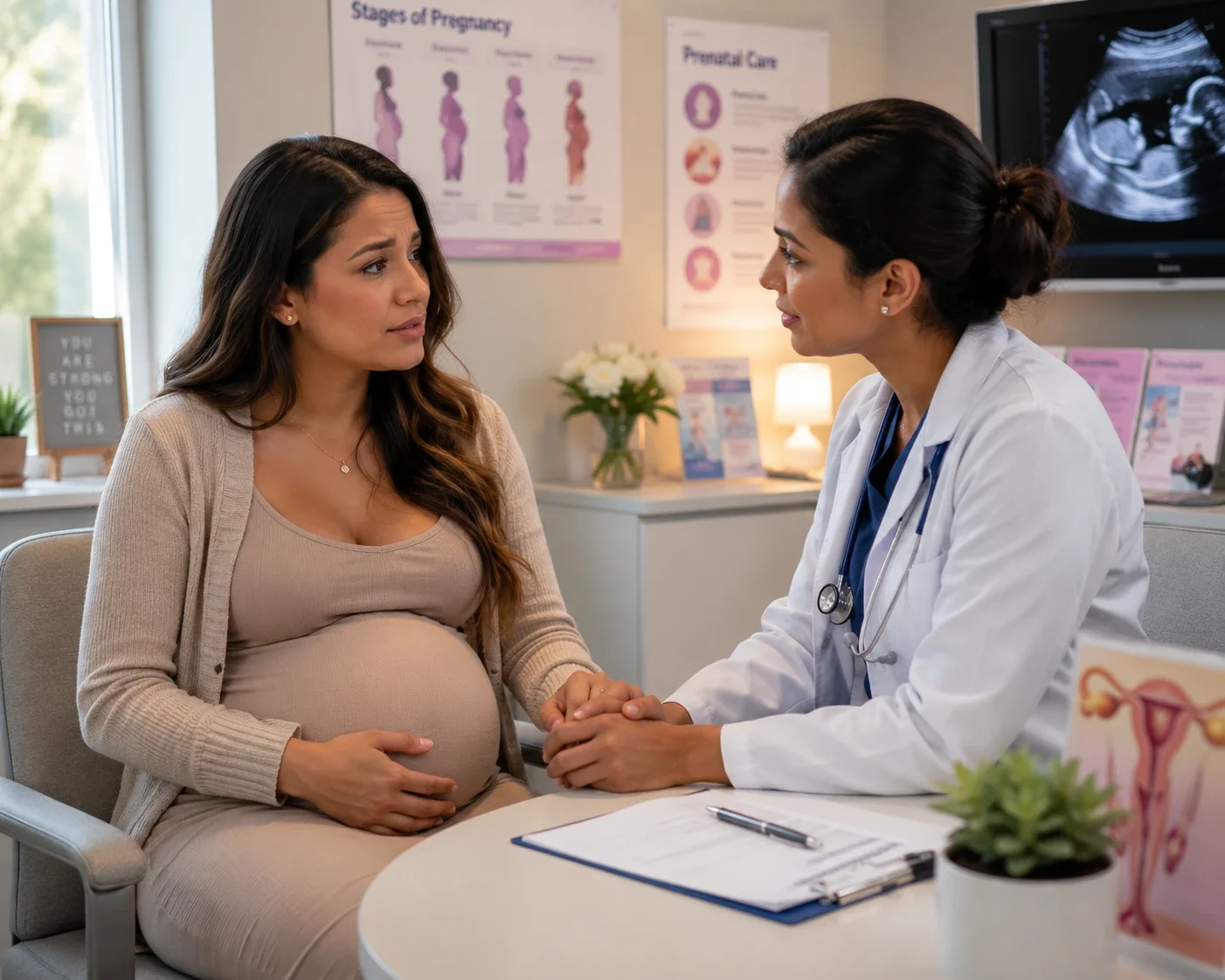
Seeing blood when you know you're pregnant can stop your heart for a moment. Your mind goes straight to the worst-case scenario and that fear is completely understandable. But before panic takes over, there's something important Dr. Monique wants you to know.
Bleeding in early pregnancy is far more common than most people realize. And in many cases, it does not mean something is wrong.
Dr. Monique explains what early pregnancy bleeding really means — and when to call your provider:
How Common Is Early Pregnancy Bleeding?
Bleeding or spotting in the first trimester affects approximately 1 in 4 pregnant women that's about 25% of all pregnancies. Between 15% and 40% of people experience some form of bleeding or spotting in the first 12 weeks, depending on the study.
Here's the part that matters most: More than half of those women go on to have completely normal, healthy pregnancies.
That statistic won't eliminate the anxiety of seeing blood during pregnancy. Nothing will completely do that. But it's a grounding truth worth holding onto while you wait to hear from your provider.
Spotting vs. Bleeding: Knowing the Difference
Not all vaginal bleeding during pregnancy is the same, and the distinction between spotting and bleeding matters when you're describing your symptoms to your provider.
Spotting is light: a few drops of pink, red, or brown blood visible on toilet paper or a panty liner. It doesn't fill a liner. Brown spotting, in particular, often indicates older blood and is generally less concerning than fresh bright red bleeding.
Bleeding looks more like a menstrual period. It's a heavier flow that requires a pad to manage and may come with clotting. If you are soaking through a pad every few hours, that is heavy bleeding and warrants immediate medical attention.
When you contact your provider, they'll want to know the color, consistency, and amount of blood, so try to take note of those details as best you can.
What Causes Bleeding in Early Pregnancy?
There are many possible causes of first-trimester bleeding, and most of them are not dangerous.
Implantation bleeding happens when the fertilized egg embeds itself into the lining of the uterus. It typically causes very light spotting around the time a period would normally be expected, which is why some people initially mistake it for their period.
Cervical sensitivity is another common cause. During pregnancy, increased blood flow to the cervix makes it more fragile and easily irritated. Light bleeding after sex, a pelvic exam, or a transvaginal ultrasound is often related to this, and is generally not a cause for concern.
Hormonal changes in early pregnancy can also lead to spotting as your body adjusts to the rapid hormonal shifts of the first trimester.
Subchorionic hematoma is when blood collects between the uterine wall and the amniotic sac. Small hematomas typically resolve on their own without complications. Larger ones carry a slightly higher risk of miscarriage and require monitoring.
Infections, including sexually transmitted infections like chlamydia or gonorrhea, or urinary tract infections, can also cause light bleeding. These are treatable, and early detection through prenatal screening makes a real difference.
More Serious Causes to Be Aware Of
While most early pregnancy bleeding is benign, some causes do require prompt medical evaluation.
Miscarriage is the most feared cause of early pregnancy bleeding, and it's natural for your mind to go there. Miscarriage related bleeding often starts light and becomes heavier over time, frequently accompanied by cramping that's more intense than typical menstrual cramps. If bleeding is heavy, worsening, or accompanied by significant pain, contact your provider immediately or go to the emergency room. It is important to know you are not to blame for a miscarriage and you can’t prevent an early miscarriage from happening.
Ectopic pregnancy: when the fertilized egg implants outside the uterus, most often in the fallopian tube. It is a medical emergency. Warning signs include severe one-sided abdominal pain, shoulder pain, dizziness, or fainting alongside bleeding. If these symptoms are present, seek emergency care without delay. An untreated ectopic pregnancy can be life-threatening.
What Your Provider Will Do
If you report bleeding during early pregnancy, your provider will most likely order an ultrasound to check on the pregnancy, looking for the gestational sac, fetal pole, and, if far enough along, a heartbeat.
Once a heartbeat is detected on ultrasound, your risk of miscarriage drops significantly. This is one of the most reassuring milestones in early pregnancy, and it's why providers prioritize getting that imaging when bleeding is present.
If it's too early in the pregnancy to see a heartbeat clearly on ultrasound, typically before 6 to 7 weeks, your provider may monitor your hCG levels (the pregnancy hormone, human chorionic gonadotropin) instead. hCG is typically checked every 2 to 3 days. In a healthy early pregnancy, these levels should roughly double every 48 to 72 hours. Rising hCG alongside a normal ultrasound picture is a reassuring sign.
When to Seek Immediate Care
Always let your provider know about any bleeding during pregnancy, no matter how light. But some symptoms require urgent attention. Don't wait for a scheduled appointment if you experience:
Heavy bleeding that soaks through a pad
Strong or worsening cramping or pelvic pain
Severe one-sided abdominal pain
Dizziness, fainting, or lightheadedness
Fever or chills
Shoulder pain (which can indicate internal bleeding from a ruptured ectopic pregnancy)
Signs of preterm labor: contractions, water breaking, or significant pressure
If your provider's office is closed and you have any of these symptoms, go to the nearest emergency room.
What to Ask Your Provider
Having questions ready before your appointment can help you make the most of the time with your care team. Here are a few worth bringing:
Based on what you're seeing, how concerned should I be?
Do I need to restrict any activities like sex, exercise, travel?
What symptoms should prompt me to go to the ER?
How will we monitor this going forward?
When should I expect to come back for a follow-up ultrasound?
At Enrich Health, we believe these conversations should feel open and unhurried. Whether you're coming in for a concern or for your regular prenatal care visit, our team makes space for your questions because informed patients navigate pregnancy with more confidence and less fear.
Light Bleeding vs. Heavy Bleeding: A Quick Guide
To put it simply, based on what Dr. Monique shares and what the research supports:
Light spotting (1 to 2 days, no cramping): Lower risk. Still worth reporting to your provider, but less likely to indicate a serious problem.
Heavier bleeding or bleeding with strong cramping: Higher concern. Contact your provider the same day, or go to the ER if symptoms are severe.
Any bleeding with one-sided pain, shoulder pain, or dizziness: Seek emergency care immediately. This could indicate an ectopic pregnancy.
You're Not Alone in This
We founded Enrich Health because we know pregnant women, especially Black women, who face disproportionate risks and too often feel dismissed in medical settings,need and deserve more support. If you're experiencing bleeding and feeling scared, that fear deserves to be taken seriously. Not rushed past. Not minimized.
Our group prenatal visits are built around exactly this kind of care, where you have time with your provider, connection with other expectant mothers, and the education you need to understand what your body is telling you.
Frequently Asked Questions
Can I bleed in early pregnancy and not be having a miscarriage?
Yes! This is actually very common. Many causes of first-trimester bleeding are harmless and resolve on their own. That said, any bleeding should be reported to your provider so it can be properly evaluated.
Is brown spotting during pregnancy normal?
Brown blood typically indicates older blood that has been in the body longer before passing. Brown spotting is generally less concerning than bright red bleeding, but still worth mentioning to your provider at your next contact.
How long does implantation bleeding last?
Implant bleeding is usually very brief, softening just one to two days of light spotting. It typically occurs around 6 to 12 days after conception, close to when a period would be expected.
Experiencing bleeding during pregnancy and have questions? Our team at Enrich Health is here for you.
Call us at (203) 200-0417 or reach out here. We serve families across Hamden and Bridgeport, CT.
Sources & Further Reading
This article was written by the clinical team at Enrich Health and reviewed for medical accuracy. For additional reading, we recommend:
