
Black Maternal Health in Connecticut: Understanding Disparities and Solutions

If you're a Black woman pregnant in Connecticut, there's something you need to know: the healthcare system wasn't designed with you in mind. And the disparities you might face aren't random, they're the result of systemic failures that we can actually fix.
Let me be direct: Black women in Connecticut experience double the rate of severe maternal morbidity compared to white women. We have higher rates of preeclampsia, preterm birth, low birth weight babies, and pregnancy-related death. Even more troubling, wealthy, educated Black women in Connecticut have worse birth outcomes than poor white women without high school diplomas. That single fact tells us everything we need to know: these disparities aren't about income, education, or individual choices. They're about racism embedded in our healthcare system.
But here's what I want you to know: these disparities are preventable. Solutions exist. And you have power.
The Reality: Connecticut's Maternal Health Crisis for Black Women
Let's look at the data. Black women make up only 13% of live births in Connecticut, yet account for 19% of pregnancy-related deaths. The rates of severe maternal morbidity—life-threatening complications are staggering: 142 per 10,000 deliveries for Black women compared to 68 for white women. That's double.
Our babies are affected too. Black infants are 4x more likely to die before their first birthday. We're 2x more likely to have low birth weight babies, and our babies are 3x more likely to experience infant mortality. These aren't small differences—they're crises.
One of the most important findings from Connecticut's Maternal Mortality Review Committee is this: 88% of pregnancy-related deaths in our state are preventable. That means these losses don't have to happen. We have the knowledge and tools to prevent them. We're choosing not to—or more accurately, the system is failing to implement what works.
Why These Disparities Exist: Four Root Causes
Before we talk about solutions, you need to understand why this is happening. It's not bad luck, and it's not your fault.
Structural Racism: Our healthcare system operates within a society structured by racism. Segregation determines where you live, what food is available, what environmental toxins you're exposed to, and what healthcare facilities are nearby. The stress of living in a racist society has physical consequences. Chronic stress from ongoing and generational racism literally changes your body's physiology—it affects your cardiovascular system, hormones, and immune function. These effects compound over a lifetime.
Implicit Bias in Healthcare: Many healthcare providers hold unconscious stereotypes about Black patients that affect their care. Research shows providers are less likely to identify pain in Black patients. They're more likely to dismiss Black women's concerns or refuse to listen when we express pain. Black women are more likely to receive unnecessary interventions like c-sections and are 1.5x more likely to be drug tested during childbirth—assumptions driven by bias, not medical evidence.
Disrespect and Mistreatment: Thirty percent of Black mothers report experiencing mistreatment during pregnancy and childbirth. Forty percent experienced discrimination. Women describe being ignored, dismissed, having requests for help refused. Some of these stories are heartbreaking—Black women in labor being left alone while in active distress, their calls for help going unanswered.
Historical Medical Exploitation: Black women carry the legacy of medical experimentation and abuse. J. Marion Sims, the father of modern gynecology, conducted horrific experiments on enslaved Black women. The Tuskegee experiment violated the medical trust of Black Americans. This history creates justified mistrust of medical institutions. When healthcare systems ask for that trust without acknowledging this history or fundamentally changing how we operate, we're asking Black women to ignore their own survival instincts.
The Solution: Redesigning Care from the Ground Up
The good news is we know what works. Research consistently shows that culturally responsive, Black-led maternal health care dramatically improves outcomes.
Evidence from successful programs: The CHOICES Center in Memphis—a Black-led midwifery clinic—showed that Black birthing parents were 2.17x less likely to have preterm birth, 4.76x less likely to have low birth weight babies, and 4.55x less likely to deliver via c-section compared to traditional care. These aren't marginal improvements—they're transformative.
What makes these models work?
First, they're led by Black women who understand the experience. Second, they use evidence-based practices proven to improve outcomes: group prenatal care, doula support, midwifery care, and whole-person approaches. Third, they treat you as a full human being, not just a medical condition. They respect your dignity, listen to your concerns, and partner with you in your care.
Connecticut is starting to recognize this. The Connecticut Health Foundation released the Maternal Health Equity Blueprint in 2025, with the goal of achieving a 50% reduction in severe maternal morbidity among Black women over three years. The state launched a new value-based payment model that rewards providers for improving outcomes—not just the number of visits. This creates an opportunity for innovative care models designed specifically to address disparities.
Enrich Health: Connecticut's Answer
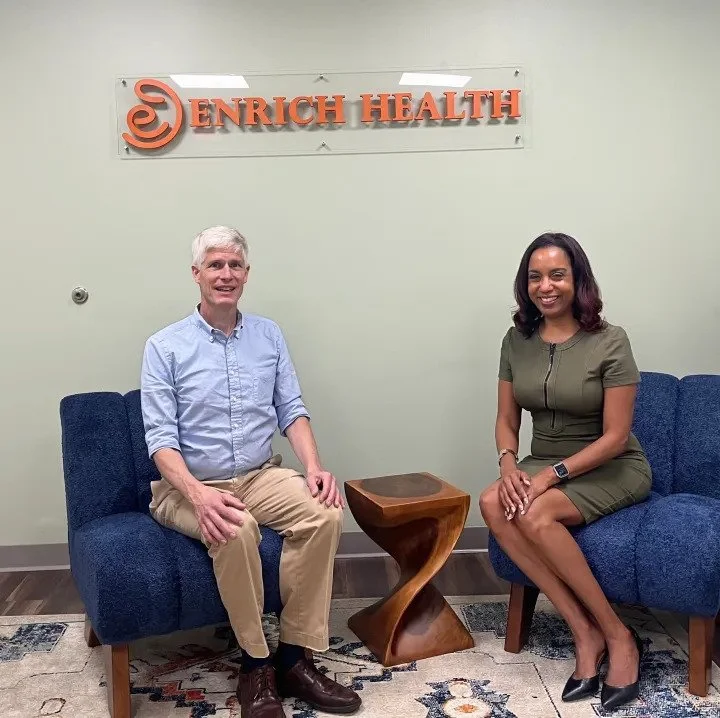
In June 2025, I founded Enrich Health with my colleague Dr. Andrea Lee because the traditional system wasn't working. As I've said before: "The traditional system was not designed for hundreds of thousands of women in America. That is part of why disparities are not going away."
Enrich Health is a Black woman-led OB/GYN practice in Hamden and Bridgeport designed from the ground up to eliminate racial disparities in maternal care. We're not working within a broken system—we're redesigning it.
Here's how our model is different:
Motherhood Circles (Group Prenatal Care): Instead of 15-minute appointments, you get 90-120 minute sessions with 8-12 other pregnant women due around the same time. Over your pregnancy, that's 20+ hours of care compared to 2-4 hours in traditional prenatal care. You build community, receive comprehensive education, and have your questions actually answered. Research shows this model reduces preterm birth by 33% and is especially effective for Black women.
Integrated Doula Services: Through our partnership with Doulas4CT, you have a certified doula who supports you throughout pregnancy, labor, and postpartum. Doulas provide continuous advocacy—they help ensure your voice is heard when providers might otherwise dismiss your concerns. They reduce c-section rates by 39-50% and are especially powerful for Black women addressing implicit bias.
Certified Nurse-Midwife Care: Midwives take a whole-person, respectful approach with lower intervention rates and higher patient satisfaction.
Outcomes Tracking: We measure what matters—birth weight, preterm birth, c-section rates, NICU admissions—and compare our outcomes to Connecticut state averages. We hold ourselves accountable.
Culturally Responsive, Evidence-Based Care: Every aspect of our practice is informed by what the research shows works for Black women, delivered by providers who understand your experience.
What You Can Do Now
These disparities are real, but you're not powerless. Here's what I'd encourage:
First, understand that these disparities are systemic—not your fault and not something you caused. You didn't fail the system. The system failed you.
Second, take action to protect yourself. Choose providers who take your concerns seriously. Seek out culturally responsive care. Bring support people who can advocate alongside you. Trust your instincts. If something feels wrong, it probably is.
Third, know that solutions exist in Connecticut. You don't have to accept the disparities as inevitable.
You Deserve More Than Survival
At Enrich Health, we believe Black women deserve more than survival—you deserve to thrive. Your pregnancy should be a time of joy and preparation, not fear or disrespect. You deserve providers who see you, hear you, and center your needs and dignity.
The data shows disparities exist. The data also shows what works: culturally responsive, Black-led care, group prenatal care, doula support, and providers committed to closing these gaps.
Connecticut is ready for this change. We are too.
If you're pregnant in Connecticut and looking for care that actually addresses your needs, we're here. You deserve better. We're here to provide it.
Contact Enrich Health:
Call: (203) 200-0417
Website: enrichhealth.info
Locations: Hamden and Bridgeport, CT
Sources
CT Mirror: Black mothers in CT face more risks during labor and delivery (June 2024)
CT Mirror: How one CT clinic is addressing racial disparities in maternal care (October 2025)
Connecticut Health Foundation: Maternal Health Equity Blueprint (2025)
DataHaven: Health Equity Report (2023)
CDC: Black Maternal Mortality and Morbidity
NIH: Structural Racism and Maternal Health
JAMA Health Forum: Community Innovations in Black Maternal Health (2024)
Medically reviewed by Dr. Andrea Lee, Certified Ob-Gyn
